


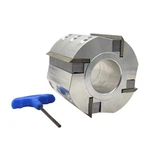
High Speed Steel Cutting Tools
Why Choose Dongguan Kangmingjian Tool Co., Ltd.?
Dongguan Kangmingjian Tool Co., Ltd. was established in 2004 and is committed to providing customers with competitive, high-quality products and services. Since its establishment, the company has had a good environment for modern innovation capabilities. It is this environment that allows the company to develop rapidly.
Quality Assurance
Each batch of goods has a corresponding quality inspection report to solve your concerns about product quality.
Delivery On Time
We cooperate with professional sea shipping, air and logistics companies to provide you with the best transportation solution to ensure timely delivery of goods.
Wide Product Range
Our company seizes market opportunities and develops a series of practical products, technologies and solutions. The product categories continue to increase, the scope of the market network continues to expand, and it has gained wide market recognition and domestic and foreign market shares. The tool series produced by the company includes woodworking tools, woodworking milling cutters, spiral cutters, woodworking drill bits, alloy row drill bits, diamond tools, circular saw blades and a series of tool products for woodworking.
Professional Technical Team
The company has a group of engineering and technical talents with rich experience in producing woodworking tools. They use ultra-fine grain tungsten steel materials, CAD, 3D design, advanced turning and milling compound machine tools, and five-axis linkage grinder production processes to ensure the use of each tool. The company accepts customers' drawings and samples for customized production.


What are High Speed Steel Cutting Tools?
High speed steel cutting tools are the cutting tools that are used for turning and facing work on the lathe. They can be used for machining most materials including wood, plastic, aluminum, brass, and steel, the tool blanks are relatively inexpensive. These tools will retain their hardness at temperatures up to 1000° F. (588° C.). For this reason, the depth of cut, cutting speed, and feed rates are important. The big advantage of high-speed steel tools is the ease with which they can be sharpened. A standard aluminum oxide grinding wheel can be used. Once shaped and sharpened, they will retain their cutting edge for a long time.
*Withstands high temperatures (600-620 °C).
*Withstands shock and impact forces.
*High cutting speeds – faster to cut with than traditional alloys like bronze or cast iron.
*Hardness suited for cutting and drilling hard materials.
*Wear resistance for extended tool life.
*It can create precise cuts in various materials.

Types of High Speed Steel Cutting Tools
HSS Milling Cutters
HSS Milling cutters are cutting tools typically used in milling machines or machining centres to perform milling operations (and occasionally in other machine tools). They remove material by their movement within the machine (e.g., a ball nose mill) or directly from the cutter's shape (e.g., a form tool such as a hobbing cutter).
Flutes / teeth: The flutes of the milling bit are the deep helical grooves running up the cutter, while the sharp blade along the edge of the flute is known as the tooth. The tooth cuts the material, and chips of this material are pulled up the flute by the rotation of the cutter. There is almost always one tooth per flute, but some cutters have two teeth per flute.Often, the words flute and tooth are used interchangeably. Milling cutters may have from one to many teeth, with two, three and four being most common. Typically, the more teeth a cutter has, the more rapidly it can remove material. So, a 4-tooth cutter can remove material at twice the rate of a two-tooth cutter.
Helix angle: The flutes of a milling cutter are almost always helical. If the flutes were straight, the whole tooth would impact the material at once, causing vibration and reducing accuracy and surface quality. Setting the flutes at an angle allows the tooth to enter the material gradually, reducing vibration. Typically, finishing cutters have a higher rake angle (tighter helix) to give a better finish.
Center cutting: Some milling cutters can drill straight down (plunge) through the material, while others cannot. This is because the teeth of some cutters do not go all the way to the centre of the end face. However, these cutters can cut downwards at an angle of 45 degrees or so.
Roughing or Finishing: Different types of cutter are available for cutting away large amounts of material, leaving a poor surface finish (roughing), or removing a smaller amount of material, but leaving a good surface finish (finishing). A roughing cutter may have serrated teeth for breaking the chips of material into smaller pieces. These teeth leave a rough surface behind. A finishing cutter may have a large number (four or more) teeth for removing material carefully. However, the large number of flutes leaves little room for efficient swarf removal, so they are less appropriate for removing large amounts of material.
Coatings: The right tool coatings can have a great influence on the cutting process by increasing cutting speed and tool life, and improving the surface finish. Polycrystalline diamond (PCD) is an exceptionally hard coating used on cutters that must withstand high abrasive wear. A PCD coated tool may last up to 100 times longer than an uncoated tool. However, the coating cannot be used at temperatures above 600 degrees C, or on ferrous metals. Tools for machining aluminium are sometimes given a coating of TiAlN. Aluminium is a relatively sticky metal, and can weld itself to the teeth of tools, causing them to appear blunt. However, it tends not to stick to TiAlN, allowing the tool to be used for much longer in aluminium.
Shank: The shank is the cylindrical (non-fluted) part of the tool which is used to hold and locate it in the tool holder. A shank may be perfectly round, and held by friction, or it may have a Weldon Flat, where a set screw, also known as a grub screw, makes contact for increased torque without the tool slipping. The diameter may be different from the diameter of the cutting part of the tool, so that it can be held by a standard tool holder. The length of the shank might also be available in different sizes, with relatively short shanks (about 1.5x diameter) called "stub", long (5x diameter), extra long (8x diameter) and extra extra long (12x diameter).
HSS Lathe Tools
HSS Lathe cutting tools are tools mounted on a lathe (wood/hand/ CNC) applicable in producing turned parts. They move along the lathe’s axis, and their path determines the workpiece’s final shape. There are several lathe non-CNC and CNC, each type with unique features and designs that determines supported lathe cutting operation and outright applications. As a result, choosing the right cutting tool requires an in-depth understanding of the tool.
HSS Copying Tools
Copy cutters are best suited for materials such as graphite, steel, cast iron, metal, non-ferrous metals, aluminum, superalloys, titanium, stainless steel, hardened materials, stainless steel materials.
The copy mill is a simple variation on the traditional end mill, in that the copy mill uses circular insert geometry as opposed to traditional parallelogram or square inserts. This difference delivers a variety of benefits, most of which complement today's trend toward lighter depths of cut and faster feed rates, or high speed machining.
Plunging capability
Enhanced helical milling and ramping
Stronger cutting edge
Larger number of usable edges

Benefits of High Speed Steel Cutting Tools
Impeccable Hardness – The hardness of high speed steel cutting tools is incomparable to any other kinds of steel. The hardness of this tool steel makes it more demanding in the market and amongst stainless steel tool suppliers. Cutting tools have sharp edges due to the hardness features of high speed steel cutting tools. The hardened characteristic of this steel retains for a lifetime. It is easier to grind compared to other materials. Filers, chisels etc. can be made with the extreme hardness provided by the high speed steel cutting tools. Furthermore, the hardness of HSS does not naturally bring out the brittleness of the cutting tool. Another reason for the sudden popularity of HSS over carbon steel is this feature of retaining hardness even at high temperatures.
Resistance Against Wears – As mentioned earlier, high speed steel cutting tools exhibits resistance against wears and tears. This feature of high speed steel cutting tools highly depends upon hardness and microstructures of the material. Times when extreme heat is applied on the high speed steel cutting tools, the components easily hold the structure for long, without any cracks or tears. Because of this property, high speed steel cutting tools makes an extremely reliable cutting tool material.
Benefits of Cobalt, Tungsten, Molybdenum etc. in HSS – M42 is a grade of HSS with high cobalt content. This improves heat resistance and red hardness of the metal. Another significant advantage of cobalt content in HSS is the reduced cycle times for developing tools. The prime benefit of tungsten in HSS is that the final steel product offers extreme hot hardness. When 10% molybdenum is added to high speed steel cutting tools, both hot hardness and toughness of the steel multiplies. In fact, these properties are effectively maintained even when HSS is exposed to high temperatures. Vanadium content in HSS increases the wear resistance of the finished tools.
Great Performance and Excellent Efficiency in High Temperatures – Cutting tools like high speed steel cutting tools is excellent for impeccable milling works. The sharp edges and unparalleled efficiency of high speed steel cutting tools makes it one of a kind. HSS functions at a very high speed compared to other alloys. With an assured long work life, high speed steel cutting tools can be comfortably used at 650 degrees. Even the heat level of high speed steel cutting tools is higher than other materials’ cutting tools.
Application of High Speed Steel Cutting Tools
Cutting
One of the most common uses for high-speed steel cuting tools is in cutting. high speed steel is extremely hard and can withstand the high temperatures that are generated when cutting metals. This makes it an ideal material for use in drill bits, saw blades, and end mills.
Milling
High-speed steel is also often used in milling. Milling is a machining process that involves removing material from a workpiece using rotating cutting tools.high speed steel cutting tool is well suited for this application as it can resist the high temperatures and forces that are generated during the milling process.
Lathe
Lathes are machine tools that are used to shape workpieces by rotating them against cutting tools. High speed steel cutting tool is often used in lathing as it can withstand the high speeds at which the workpiece is rotated. Additionally, high speed steel cutting tool is very hard, which helps to prolong the life of the tool.
Taps and Dies
High speed steel cutting tool is often used for taps and dies as it can withstand the high forces that are required to cut threads into metal. Taps and dies are tools that are used to create threads in workpieces. Taps are used to create internal threads, while dies are used to create external threads.
Ream
Reaming is to enlarge or finish holes that have been drilled into workpieces. High speed steel cutting tool is often used for reaming as it can withstand the high speeds at which the workpiece is rotated. Additionally, high speed steel cutting tool is very hard, which helps to prolong the life of the tool.

6 Tips For Picking An HSS Saw Blade
1.Check The HSS Saw Blade Manufacturer
A crucial factor to consider when picking an HSS saw blade is who the manufacturer is. Ensure that your first choice of HSS saw blade manufacturer is one with a reliable track history. That is to say, choose a brand that is well known and for whom many users over the years have vouched for. Such manufacturers are less likely to sell low-quality blades, which might jeopardize their brand images as opposed to lesser-known manufacturers.
2.Reflect On The Number Of Teeth
One of the essential features to consider when picking an HSS blade is the number of teeth it has. It is because there is a direct correlation between how many teeth are present and the cleanness of the cut.
For instance, HSS cutting tools that have plenty of teeth will give a cleaner, smoother cut as opposed to those with a lesser number of teeth. As such, blades with plenty of teeth are preferable for use in trim carpentry and cabinet making, such as in the making of a coffee table. However, blades with lesser teeth are preferable for use in rough carpentry work, such as in the making of wooden sawhorses.
3.Consider The Shape Of The Saw Blade Tooth
When buying an HSS tool, it is crucial to consider the shape of the blade’s teeth, which is also the bevel angle. It is because the shape, and the manner of the grouping of the teeth, affects how the blade cuts. So, the blade tooth configuration you choose should depend on whether you want to use the saw blade for ripping, crosscutting, or laminates.
The bevel of a blade can be flat (with no angle), alternating, high alternating, etc. The higher the angle is, the more smoothly the blade will cut. Below are five different blade tooth configurations and what each is most suitable for:
Flat-Top – HSS cutting tools with flat-top teeth are more suitable for ripping both hard and softwoods. Rip blades have a design that enables them to cut through wood quickly and smoothly.
It is important to avoid the wood chipping and splintering, which usually occurs when you don’t cut wood with the grain. And it is for this exact reason that flat-top teeth saw blades are the best for ripping.
Alternate Top Bevel (ATB)–the ATB-type blade is as the name a suggests: a blade whose teeth alternates between a right and a left-hand bevel.
It is the best for use in crosscutting applications (of both natural woods and veneered plywood) because it cuts cleanly and smoothly.
Triple Chip Grind – this particular blade teeth type is best suited for use in cutting hard materials. It can be anything from a laminate to an MDF and even plastic.
Like the Alternate Top Bevel (ATB) type teeth, the TCG’s teeth also alternates. Unlike the ATB, it alternates between a flat tooth and a higher “trapeze” tooth.
Combination Tooth – combination tooth blades are blades that can perform a combination of different tasks, namely crosscutting and ripping. It alternates between the ATB (Alternate Top Bevel) teeth type and the FT (Flat-Top) teeth type with the ATB occurring in a sequence of four followed by one FT. A large gullet then ensures the separation of one group from the other.
High Alternate Top Bevel (Hi-ATB)– when we refer to Hi-ATB blades, we are referring to blades with the ability and capacity for extra-fine crosscutting.
Blades in this category have a high bevel angle, which enhances their propensity for knife-like action. They are capable of cutting materials that have a melamine surface without any chipping occurring.
4.Ensure The Bore Size Aligns
HSS saw blades have a bore, which is the hole that enables their attachment to the saw. When you are buying an HSS blade, endeavour to choose one with a bore size that matches the bore shaft of your saw unless you have a reducer ring.
Also, make sure that the diameter of the blade hole is slightly smaller than the diameter of the nut that connects the blade to the shaft (about 5 mm).
5.Take The Hook/Rake Angle into Account
The hook simply refers to the position the tooth assumes when it comes in contact with the cutting surface.
A positive hook angle assumes a position that is perpendicular to the wood’s surface. It aggressively eliminates waste material with the effect that the cut is quick but rough.
A negative hook angle, on the other hand, isn’t as aggressive. It cuts slower than a positive hook but results in a cleaner, smoother finish.
6.Consider The Blade’s Diameter
When picking an HSS blade for your saw, you must take its diameter into account. The design of a particular saw is such that it is suitable for use with a blade of a specific size.
Bear in mind that the diameter of the blade you purchase will affect the depth of the cut you will be making. As such, endeavour to choose a blade, and saw that would provide the type of cut you desire.

How to Maintain High Speed Steel Cutting Tools
At the point when you think about a HSS cutting instrument, consider heat. The less warmth you make (in the device), the more drawn out an instrument will last. At the point when you heat treat HSS you take it to a specific temperature (now and again called high warmth) for a predefined time. This gives the HSS its definitive hardness, yet it's extremely weak. Next its took to a temperature to "temper or draw" it. This is generally accomplished more than once. This carries the hardness to where you need it and gives the HSS sturdiness (both hardness and strength are controlled by the composite in the material). The Tempering temperature must not be surpassed in ulilizing or honing the device or it will toughen (relax). This will differ from a couple of focuses (Rc) to a full downside. This is a very fundamental clarification of warmth rewarding HSS.

Our Factory
We have a complete factory production, quality supervision and delivery.
Our Certificate
At present, we have obtained the following certificates.

Ultimate FAQ Guide to High Speed Steel Cutting Tools
Q: 1. What is High Speed Steel?
Q: 2. What are High Speed Steel Cutting Tools?
Q: 3. How are High Speed Steel Cutting Tools made?
Q: 4. What are the advantages of High Speed Steel Cutting Tools?
Q: 5. What are the disadvantages of High Speed Steel Cutting Tools?
Q: 6. What types of High Speed Steel Cutting Tools are there?
Q: 7. What factors should be considered when selecting High Speed Steel Cutting Tools?
Q: 8. How are High Speed Steel Cutting Tools used?
Q: 9. How long do High Speed Steel Cutting Tools last?
Q: 10. What is the best way to sharpen High Speed Steel Cutting Tools?
Q: 11. What is the difference between High Speed Steel and Carbide Cutting Tools?
Q: 12. Can High Speed Steel Cutting Tools be used on stainless steel?
Q: 13. What is the maximum cutting speed for High Speed Steel Cutting Tools?
Q: 14. How often should High Speed Steel Cutting Tools be replaced or sharpened?
Q: 15. Can High Speed Steel Cutting Tools be recoated?
Q: 16. What is the difference between High Speed Steel and Tool Steel?
Q: 17. Can High Speed Steel Cutting Tools be used for woodworking?
Q: 18. Can High Speed Steel Cutting Tools be used on plastics?
Q: 19. What is the difference between High Speed Steel and Cobalt Steel Cutting Tools?
Q: 20. What is the maximum depth of cut for High Speed Steel Cutting Tools?