


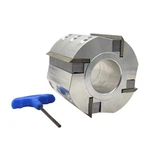
Wood Turning Tool
Why Choose Dongguan Kangmingjian Tool Co., Ltd.?
Dongguan Kangmingjian Tool Co., Ltd. was established in 2004 and is committed to providing customers with competitive, high-quality products and services. Since its establishment, the company has had a good environment for modern innovation capabilities. It is this environment that allows the company to develop rapidly.
Quality Assurance
Each batch of goods has a corresponding quality inspection report to solve your concerns about product quality.
Delivery On Time
We cooperate with professional sea shipping, air and logistics companies to provide you with the best transportation solution to ensure timely delivery of goods.
Wide Product Range
Our company seizes market opportunities and develops a series of practical products, technologies and solutions. The product categories continue to increase, the scope of the market network continues to expand, and it has gained wide market recognition and domestic and foreign market shares. The tool series produced by the company includes woodworking tools, woodworking milling cutters, spiral cutters, woodworking drill bits, alloy row drill bits, diamond tools, circular saw blades and a series of tool products for woodworking.
Professional Technical Team
The company has a group of engineering and technical talents with rich experience in producing woodworking tools. They use ultra-fine grain tungsten steel materials, CAD, 3D design, advanced turning and milling compound machine tools, and five-axis linkage grinder production processes to ensure the use of each tool. The company accepts customers' drawings and samples for customized production.
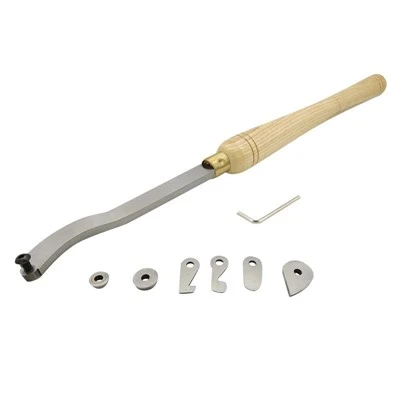
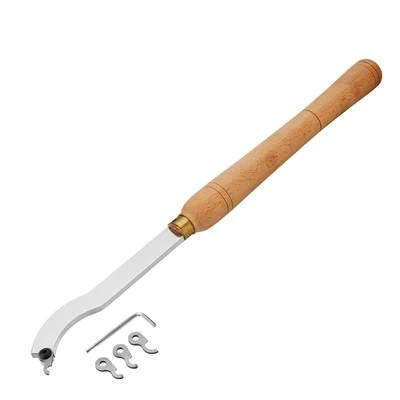
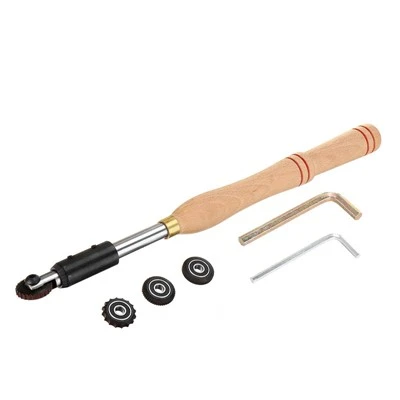
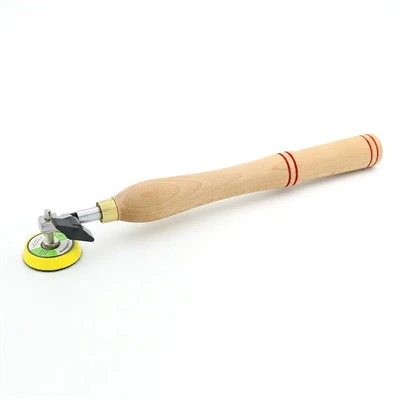
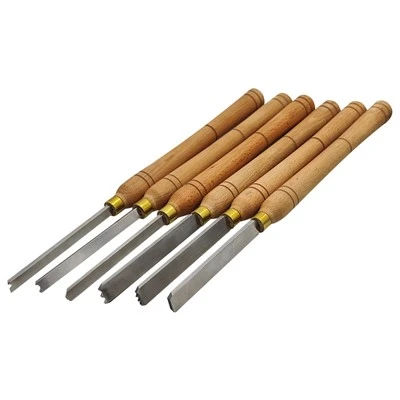

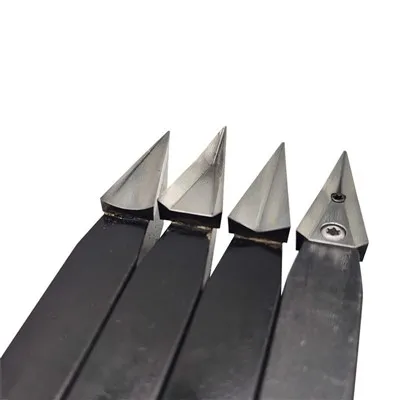

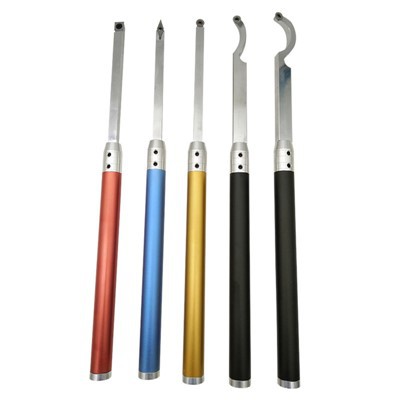

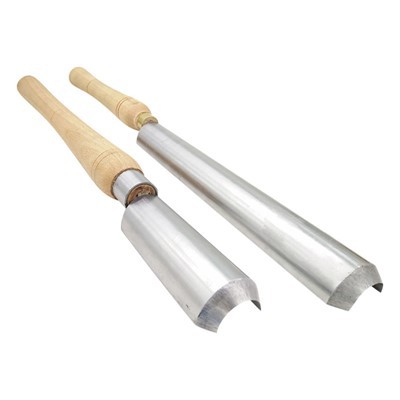

What is Wood Turning Tool?
Wood turning tools are hand tools that allow users to make different cuts to their workpieces. For example, spindle roughing gouges are used when first starting a turning job to quickly remove square corners, while parting tools are used to make final cuts and create intricate details. There are several types of wood-turning tools. Each type is used to make a specific kind of cut or obtain a particular surface finish on a wooden workpiece.
Wood turning tools are designed to combat the torque problem commonly found when using simple, bent tools to hollow vessels on a lathe. The best lathe cutting tool is made from high speed steel. When a lathe cutting tool removes metal, it applies considerable tangential force to the workpiece. To safely perform a facing operation with a lathe cutting tool, the end of the workpiece must be as close as possible to the jaws of a chuck. In machining hard work materials, the back rake angle must be small, even negative for carbide and diamond tools. For high-speed steels, a back rake angle is normally chosen in the positive range. The range of turning tools includes boring bars, which can be used for internal shouldering, grooving, and profiling for producing complex profiles in one continuous cycle. Boring is generally used for the enlarging of an existing hole. For turning tool sharpening, a power sharpening system or a hand sharpening system can be used. Turning tools can also be hand-made and can be used for ease of use and productivity. Turning tools are designed and manufactured to meet most industry specifications.
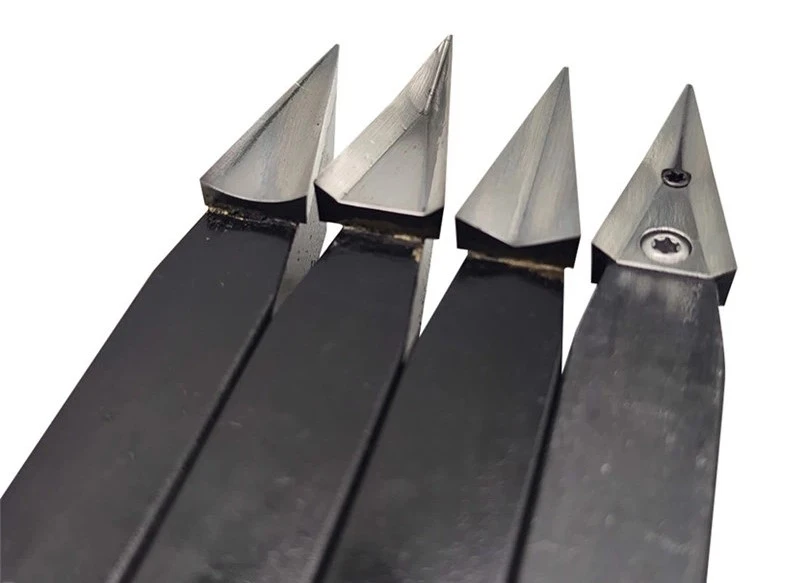
Types of Wood Turning Tool
1. Spindle Roughing Gouge
A spindle roughing gouge is typically the first wood lathe turning tool used when starting a new project. For this particular tool, a wide U-shaped flute extends out from the grip. This tool allows users to quickly remove unwanted material and convert a square workpiece to a round one. By doing so, users can center their work on an axis running along the length of the workpiece. Spindle roughing gouges are often made from HSS (high-speed steel) and can come in many different sizes and prices. In general, this tool will cost anywhere between $20–120.
2. Spindle Gouge
Spindle gouges (shallow fluted gouges) are wood lathe turning tools that have a noticeably smaller-sized flute than roughing gouges. These tools are used to shape workpieces into desired shapes through the creation of features such as beads, coves, and ridges. The cutting edge of these tools is ground and beveled to obtain smooth surface finishes on workpieces. Spindle gouges can come in a variety of sizes and prices. This tool will typically cost anywhere between $10–110.
3. Skew Chisel
Skew chisels have a flat blade and are used for “planing” or creating smooth surfaces on wooden workpieces. Additionally, the skew chisel is used to finely remove material to obtain desired thicknesses and make shallow curves, v-cuts, and pummels. This wood lathe turning tool is notorious for being difficult to handle and requires patience to use correctly.
It is recommended to use the tool at a 45°angle to the workpiece and avoid using the corners of the tool. Using the corners can cause the workpiece to “catch” – which can be potentially dangerous. However, once familiar with the tool, the skew chisel is one of the most useful and versatile wood-turning tools. This tool comes in many different sizes, blade shapes, and prices. A typical skew chisel will cost between $10–80, but high-grade tools can cost as high as $200.
4. Parting Tool
Parting tools are wood lathe turning tools that enable fine details to be created. This tool is characterized by its instantly recognizable profile. The tool has a straight and thin body with a steep chisel and faceted edges. The parting tool is often one of the final tools used in wood-turning projects. It’s used to remove the excess waste material and create precise details like filets, beads, and spigots. Like other wood-turning tools, the parting tool can come in many different sizes and varieties and will cost between $20–100.
5. Bowl Gouge
Bowl gouges (deep-fluted gouges) are faceplate wood lathe turning tools that are ideal for shaping the interior and exterior curves of bowls and similar items. Bowl gouges have a long, deep-fluted blade (deeper than a spindle gouge). The tip of the blade is either rounded or sharply pointed. Like other tools, different sizes and shapes of bowl gouges are ideal for different applications. This tool will generally cost between $20–120.
6. Scraper
Scapers, like parting tools, are used for obtaining the final, desired surface finishes on turned bowls. In general, there are two types of scrapers and both are faceplate turning tools: square-nose and round-nose. Square-nose scrapers are used for finishing the outside of a bowl, while round-nose scrapers are used for finishing the inside of a bowl. While these are the two main types, there are other types for different applications. Scapers are useful because they can often reach areas that can’t be reached by other wood-turning tools. These tools will usually cost between $15–130.
Benefits of Wood Turning Tool

Versatility:
Wood Turning Tool can be used to create a wide range of shapes and sizes, making it suitable for a variety of woodworking projects.

Efficiency:
Wood Turning Tool can create complex shapes more efficiently than manual techniques, reducing the time and effort required to create a finished product.

Aesthetics:
Wood Turning Tool can create unique, intricate designs that enhance the visual appeal of the finished product.

Adaptability:
Wood Turning Toolc an be adapted to work with a wide range of wood species, allowing for greater flexibility in design.
Turning tools can be used in various applications. For example the roughing gouge tool is designed to remove material quickly. Spindle gouges are useful in finishing a surface or to clean up hollows and similar spots where skews won't work. Turning tools are used to create furniture, bowls, platters and serving trays, pens, and a number of other items.


How to Choose Wood Turning Tool
In choosing the best wood turning tool for beginners, it is best to purchase premium-quality tools as these will always have the most longevity and provide the highest-quality cuts. The list below shows some general steps toward choosing the best turning tool for beginners:
*Become acquainted with using both spindle roughing gouges and spindle gouges. Pick a fairly large size of roughing gouge made from high-speed steel, preferably around ¾”. Pick a slightly smaller size (¼”–½”) for spindle gouges. These two tools will help beginners get a feel for how to grip the turning tool and how to remove material from the workpiece.
*Pick tools with slightly longer handles. This will enable beginners to tightly grip the tool and leverage it for better control and cut accuracy.
*Practice using other tools like chisels and parting tools for spindle finishing or bowl gouges and scrapers for faceplate finishing.
How to Use Wood Turning Tool
Different wood lathe turning tools have different uses and hence necessitate different techniques and grips. The list below shows steps on how to use a wood-turning tool:
*Position your hands so there is no way they can contact the workpiece. Use your dominant hand to handle the tool and your other hand to rest it and hold it firmly against the tool rest and workpiece. Make sure your non-dominant hand is lower than your dominant hand. This method will allow you to cut at an angle and ensure the workpiece is always contacting the cutting edge of the tool.
*Ensure the turning tool is always contacting the tool rest. Minimize the distance between the rest and workpiece to about ¼ inch.
*Ensure that the bevel of the cutting tool is behind the blade when cutting. This will help prevent removing too much material at one time and also help prevent the tool from “catching” the workpiece.
*Cut with the grain, not against it. Always start cuts from the outside edges of the workpiece towards the center. Not doing so is considered cutting “uphill,” or against the grain, and can make it much harder to control the tool.
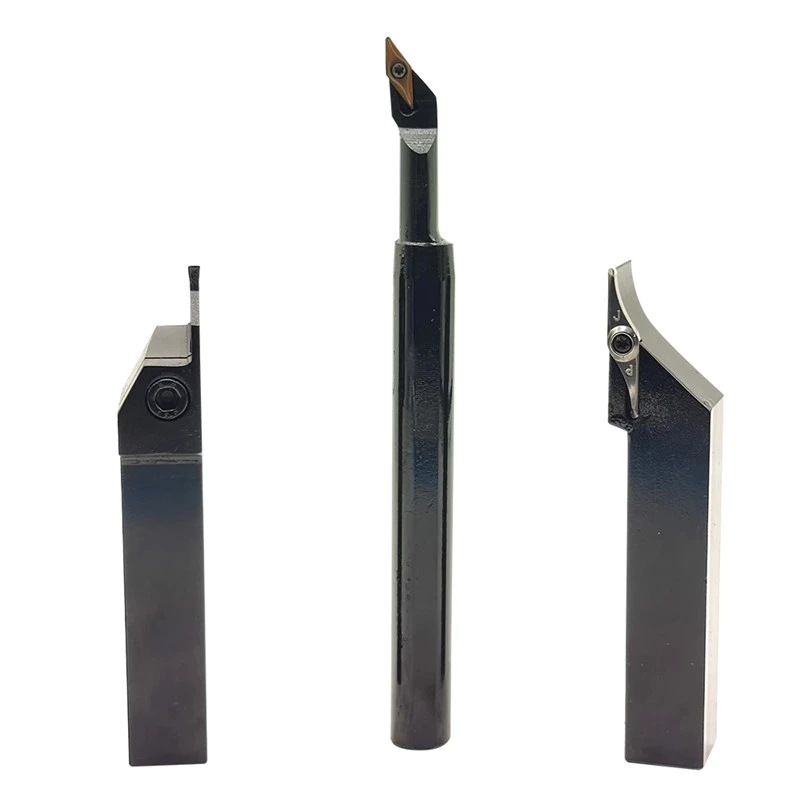
How to Identify a Wood Turning Tool
Wood lathe turning tools are easily identifiable by their shape and blade. The list below shows how to identify wood-turning tools:
*Gouges are round and cylindrical-shaped tools, while chisels, parting tools, and scrapers are flat bar-shaped tools.
*Gouges are distinguishable based on the size of their flute. Spindle roughing gouges have wide, U-shaped flutes; spindle gouges have narrow, shallow, U-shaped flutes; and bowl gouges have deep, U-shaped flutes.
*Chisels, parting tools, and scrapers are distinguishable based on the shape of their blades. Chisels have two flat, grounded cutting edges that come to a point. Parting tools have cutting edges that come to a point from all sides and resemble an arrow. Scrapers simply look like flat bars.
How to Use Wood Turning Tool Safely
When woodturning, it is important to wear certain personal protective equipment (PPE). When working with spinning objects, loose clothing should not be worn; all jewelry should be removed; and long hair should be tied back. Since loose rags may also transfer color to the piece, paper towels should be used to avoid snags and accidents. Wood shavings generated during turning will need to be periodically removed.
Eye Protection
Eye protection is a necessity when woodturning. There are several types of PPE available for eye protection such as safety goggles, glasses, and visors. Although all of these are adequate, a visor that protects the entire head from dust and debris provides the highest level of protection.
Respiratory Equipment
Respiratory equipment and dust collection systems are also important when woodturning or doing any type of woodworking that creates dust. This can range from a simple disposable dust mask to a full-face helmet with a built-in respirator. Most standalone respiratory equipment will interfere with dust shields and visors, so devices that incorporate both are ideal. Many kinds of wood create dust that is a health hazard. For example, cocobolo (granadillo) dust can cause toxic shock. Many people are sensitive to oils carried in walnut, locust, and oak sawdust. Long-term exposure to fine wood dust has also been linked with an increased risk of developing cancer.
Ear Protection
A lathe is a quiet machine compared to other power tools, but earplugs should be worn if noise is excessive. This may be due to motor (fan) noise from a shop dust collector or the combination of wood and tool being used.
Hand/Skin Protection
Gloves should not be used with rotating equipment due to the risk of getting tangled in the machine. However, wood can cause splinters that not only puncture the skin but also cause festering sores or skin irritation. The polishes and finishes used in woodturning often contain organic solvents such as methanol, turpentine, and toluene, all of which can be harmful irritants to the skin. This subject continues to be debated in the community.
Foot Protection
Protective footwear such as leather steel-toe boots is essential for any type of shop activity.

Our Factory
We have a complete factory production, quality supervision and delivery.
Our Certificate
At present, we have obtained the following certificates.

Ultimate FAQ Guide to Wood Turning Tool
Q: 1. Is it easy to use turning tools?
Q: 2. What are wood turning tools?
Q: 3. How do wood turning tools work?
Q: 4. What are the different types of wood turning tools?
Q: 5. What is a spindle gouge?
Q: 6. What is a bowl gouge?
Q: 7. What is a parting tool?
Q: 8. What is a skew chisel?
Q: 9. What kind of lathe is best for wood turning tools?
Q: 10. What kind of wood is best for wood turning tools?
Q: 11. What is the difference between a roughing gouge and a spindle gouge?
Q: 12. How do you sharpen wood turning tools?
Q: 13. How often should you sharpen your wood turning tools?
Q: 14. What is the proper way to hold a wood turning tool?
Q: 15. How do you use a bowl gouge?
Q: 16. How do you use a spindle gouge?
Q: 17. Can you use softwoods for wood turning?
Q: 18. What is the difference between green and dried wood for wood turning?
Q: 19. What safety precautions should you take when using wood turning tools?
Q: 20. How do you choose the right wood turning tool for your project?