


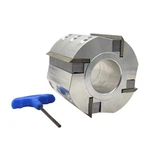
Diamond Cutting Tools
Why Choose Dongguan Kangmingjian Tool Co., Ltd.?
Dongguan Kangmingjian Tool Co., Ltd. was established in 2004 and is committed to providing customers with competitive, high-quality products and services. Since its establishment, the company has had a good environment for modern innovation capabilities. It is this environment that allows the company to develop rapidly.
Quality Assurance
Each batch of goods has a corresponding quality inspection report to solve your concerns about product quality.
Delivery On Time
We cooperate with professional sea shipping, air and logistics companies to provide you with the best transportation solution to ensure timely delivery of goods.
Wide Product Range
Our company seizes market opportunities and develops a series of practical products, technologies and solutions. The product categories continue to increase, the scope of the market network continues to expand, and it has gained wide market recognition and domestic and foreign market shares. The tool series produced by the company includes woodworking tools, woodworking milling cutters, spiral cutters, woodworking drill bits, alloy row drill bits, diamond tools, circular saw blades and a series of tool products for woodworking.
Professional Technical Team
The company has a group of engineering and technical talents with rich experience in producing woodworking tools. They use ultra-fine grain tungsten steel materials, CAD, 3D design, advanced turning and milling compound machine tools, and five-axis linkage grinder production processes to ensure the use of each tool.The company accepts customers' drawings and samples for customized production.


What are Diamond Cutting Tools?
A diamond tool is a cutting tool with diamond grains fixed on the functional parts of the tool via a bonding material or another method. As diamond is a superhard material, diamond tools have many advantages as compared with tools made with common abrasives such as corundum and silicon carbide.
*High Hardness and Wear Resistance:
Natural diamond is the hardest material that has been found in nature. Diamond has very high wear resistance. When machining high hardness materials, the service life of diamond cutting tools is 10 ~ 100 times of that of cemented carbide tool, even hundreds of times.
*It Has Very Low Friction Coefficient
The friction coefficient between diamond and some non-ferrous metals is lower than that of other cutting tools, which can reduce the cutting force.
*The Cutting Edge is Very Sharp:
The cutting edge of diamond cutting tools can be very sharp, and the cutting edge of natural single crystal diamond tools can be as high as 0.002-0.008 μ m. It can carry out ultra-thin cutting and ultra precision machining.
*It Has High Thermal Conductivity
The thermal conductivity and thermal diffusivity of diamond are high, the cutting heat is easy to dissipate, and the cutting part temperature of the tool is low.
*It Has Low Coefficient of Thermal Expansion
The thermal expansion coefficient of diamond is several times smaller than that of cemented carbide, and the change of tool size caused by cutting heat is very small, which is particularly important for precision and ultra precision machining with high dimensional accuracy requirements.

Different Types of Diamond Cutting Tools
1. Natural Diamond Cutter:
Natural diamond has been used as a cutting tool for hundreds of years. The natural single crystal diamond tool has been finely ground, and the edge can be sharply sharpened. The radius of the cutting edge can reach 0.002μm, which can achieve ultra-thin cutting and can be processed to a very high level. Workpiece accuracy and extremely low surface roughness are recognized, ideal and irreplaceable ultra-precision machining tools.
2. PCD Diamond Cutter:
Natural diamond is expensive. Diamond is widely used in cutting or polycrystalline diamond (PCD). Since the early 1970s, polycrystalline diamond prepared by high temperature and high pressure synthesis technology, after the successful development of PCD blade, has been naturally used in many occasions. Diamond tools have been replaced by synthetic polycrystalline diamond. PCD raw materials are abundant, and the price is only one-tenth to one-tenth of that of natural diamond. PCD cutters are not able to grind extremely sharp edges, and the surface quality of the machined workpieces is not as good as natural diamonds. PCD inserts with chipbreakers are now also available in the industry. Therefore, PCD can be used for fine cutting of non-ferrous metals and non-metals, and it is difficult to achieve ultra-precision mirror cutting.
3. CVD Diamond Cutter:
Since the late 1970s to the early 1980s, CVD diamond technology has emerged. CVD diamond refers to a diamond film synthesized by chemical vapor deposition (CVD) on a heterogeneous matrix (such as cemented carbide, ceramics, etc.), which has exactly the same structure and characteristics as natural diamond. The performance of CVD diamond is very close to that of natural diamond, and it has the advantages of natural single crystal diamond and polycrystalline diamond (PCD), and to some extent overcome their shortcomings.

Benefits of Diamond Cutting Tools
1.Wide Range of Offerings: Diamond tipped solutions are provided in the form of moulder heads, shaper heads, tenon heads, hogging heads, CNC router bits, panel saws, scoring saws, gang saws, trim saws, grooving saws, and cutters for specialized machines.
2. Customized for Application. Diamond tools are designed to match a customer’s specific application. Look for the technical sales team that goes the extra mile to ask you for spindle RPM, feed rates, wood species, laminate types, cutting directions and grain directions. They will send this information to an engineering and technical staff for evaluation, to be compared in a large database of cutting data. Matching your specific needs from experience and creating a custom cutting tool for your application.
3. High Impact Resistance, Long Life. Wood product manufacturers that are not taking advantage of the benefits of diamond tip tooling over traditional carbide tip and insert tooling might be missing an opportunity. While not suitable for every cutting application, diamond can be used in many applications, including those involving solid wood, wood-based materials, plastics, or composites. Advancements in diamond grades and sharpening technology also have resulted in higher impact resistance compared to carbide tooling, typically 20 to 75 times longer life depending on the application. There also is a higher tool life per cost ratio in favor of diamond.
4. Stacked Vs Single Bodies. Another important feature to look for in diamond tools for profiling is the design; one that maximizes the number of sharpening’s while maintaining the exact profile shape every time. One option is for adjustable stacked tool bodies combined with intricately machined tool bodies. This allows for large sharpening removals before replacing tips. Another option is for profile tools in a single piece tool body. However, while a one-piece tool body design will have a lower new tool price upfront, it can cost more across the total life of the tool, as service costs can accumulate more rapidly over time due to frequent replacement of the diamond tips. There also is potential for compromising the tool life by repeatedly reheating the brazed diamond tips in order to maintain the profile shape.
Application of Diamond Cutting Tools
Applicable Materials
Diamond tools are suitable to process the following materials:
Carbide alloy
Hard or abrasive non-metallic materials, for example, stone, concrete, asphalt, glass, ceramics, gem stone and semiconductor materials.
Non-ferrous metals such as aluminium, copper and their alloys, and some soft but tough materials such as rubber and resin.
As diamonds can react with Fe, Co, Ni, Cr, V under the high temperatures generated in the grinding processes, normally diamond tools are not suitable to process steels, including common steels and various tough alloy steels, while the other superhard tool, cubic boron nitride (CBN) tool, is suitable to process steels. The tools made with common abrasives (e.g. corundum and silicon carbide) can also do the task.
Applied domains
Diamond tools are used in the following domains:
Geological or project exploration: Diamond geological drill bits, diamond oil drill bits and diamond thin-wall drill bits are often used. The main application of PCD drilling bits is in the oil and natural gas industries and the mining industry.
Stone processing: Diamond circular saw blades, diamond gang saws, diamond band saws are used to saw marble, granite and other stone blocks. Diamond wire saws are used in stone quarries to exploit raw stone blocks. Shaped diamond tools are used to process stone to a particular shape. Resin-bonded diamond polishing pads are used to polish stone.
Construction: Medium or small sized diamond saw blades, diamond core drill bits and some diamond grinding or polishing tools are often used in repairing roads, remodeling buildings, and processing building materials.
Woodworking: Composite laminate flooring is widely used. It is wearable as stone. PCD circular saw blades, profiling cutter, twist drill bits and other diamond tools are used in its processing.
Auto spare parts processing: PCD and PCBN cutting tools are used to meet the high efficiency and low deviation processing requirements in this domain.
IT and home appliance products processing: High-precision super-thin diamond cutting wheels are used to cut silicon slices. Resin-bonded diamond grinding wheels are used to process ceramics in optical fiber industry.
Engineering ceramics processing: Engineering ceramics are widely used in many industries. They have the properties of high toughness, high hardness, high-temperature resistance. High-toughness and durable diamond grinding wheels are developed to process them.
Carbide tools and other mechanical tools processing: Diamond tools are used to gain high processing precision and efficiency.

How to Choose Diamond Cutting Tools?
1. Are You Using a Simple or an Intricate Form?
Simple Form
Grit Tool: Long tool life and reduced dressing costs
Intricate Form
Single Point: the metal surrounding the diamond(s) in a grit tool could hit the sides of the wheel, resulting in a form error.
Special form tools with coned or chiseled diamond tips: The diamonds in these tools are lapped in a way that allows you to hit all those small angles and radii in your form. The more intricate your form, the more intricate you need your tool to be.
2. Do You Value Initial Cost or Overall Price?
Non-resettable tools
The diamonds only have one settable point and are disposable with a low initial cost. Non-resettable tools are also the most cost efficient option if resetting is not practical.
Resettable tools
The diamonds used for these tools are higher quality with multiple points suitable for dressing (up to four settable points). Once the diamond has been worn, return the tool to the factory for the diamond to be reset it in a new shank. Although there is a higher upfront cost, resetting the diamond costs a fraction of a new single point tool and yields significant savings over time.
3. What Carat Size does Your Abrasive Supplier Recommend for the Width and Diameter of Your Wheel?
When it comes to choosing the carat weight for your diamond tool, think about the wheel diameter and width of your machine; the larger these numbers are, the larger the carat weight must be. If you are unsure, follow your abrasive supplier’s guidelines. Using an undersized diamond causes the stones to become superheated, even when grinding wet, which will soften the stone and cause undue wear to your machine and poor wheel conditioning.
4. Are You Concerned about Turning Your Dressing Tools?
Some are reluctant to turn dressing tools, even though it extends the life of the tool, because of the risk of misalignment. Indexable tools solve this problem by not requiring loosening during indexing. This alleviates the risk of misalignment and makes them the tool of choice for many operators. With a two-part construction featuring separate head and shank pieces, it is easy to simply turn the indexable head with a wrench while the tool shank stays in place.
How to Use Diamond Cutting Tools Properly
Use The Right Diamond Tool For Your Application
Provide as much information possible about your application and
material being machined. We can help you better define your needs, so you can obtain the right tool for the job. Saving money and time.
Use the Right Rpm's
If the RPM on your equipment runs either too fast or too slow, excessive heat will be generated. Hence damaging your diamond tool. Charts provided in this manual will help you identify and select the right RPM's for your diamond tools. As well as provide suggestions on ways you can achieve it.
Use the Right Coolant at Point of Contact
Depending on your application, there is a large variety of coolants you can select. Ranging from plain water, to water soluble coolants, to minerals and oils. Your specific application will be a determining factor in selecting a coolant. Not matter what Coolant you decide to use, make sure it is used at the point of contact where material and tool intersect.
Keep Diamonds Thoroughly Exposed at All Times
Dress your new diamond tools before usage. Make sure to frequentlyredress your diamond tool while using it. Always use a recommendeddressing stick.

Our Factory
We have a complete factory production, quality supervision and delivery.
Our Certificate
At present, we have obtained the following certificates.

Ultimate FAQ Guide to Diamond Cutting Tools
Q: 1. What is a diamond cutting tool?
Q: 2. What are the advantages of using diamond cutting tools?
Q: 3. What are the different types of diamond cutting tools available?
Q: 4. What is a diamond blade?
Q: 5. What is a diamond core bit?
Q: 6. Can diamond cutting tools be resharpened?
Q: 7. What is the importance of the depth of cut when using diamond cutting tools?
Q: 8. What is a diamond drill?
Q: 9. What materials can be cut using diamond cutting tools?
Q: 10. How is the diamond cutting tool different from other cutting tools?
Q: 11. How long do diamond cutting tools last?
Q: 12. How does the size of the diamond particle affect the cutting tool’s performance?
Q: 13. What is the significance of diamond concentration in diamond cutting tools?
Q: 14. What is the bonding material used in diamond cutting tools?
Q: 15. What is the difference between wet and dry cutting with diamond cutting tools?
Q: 16. Which is better, wet or dry cutting with diamond cutting tools?
Q: 17. What is laser welding in diamond cutting tools?
Q: 18. What is the advantage of laser welding in diamond cutting tools?
Q: 19. How is the performance of diamond cutting tools affected by the feed rate?
Q: 20. How is the performance of diamond cutting tools affected by the spindle speed?